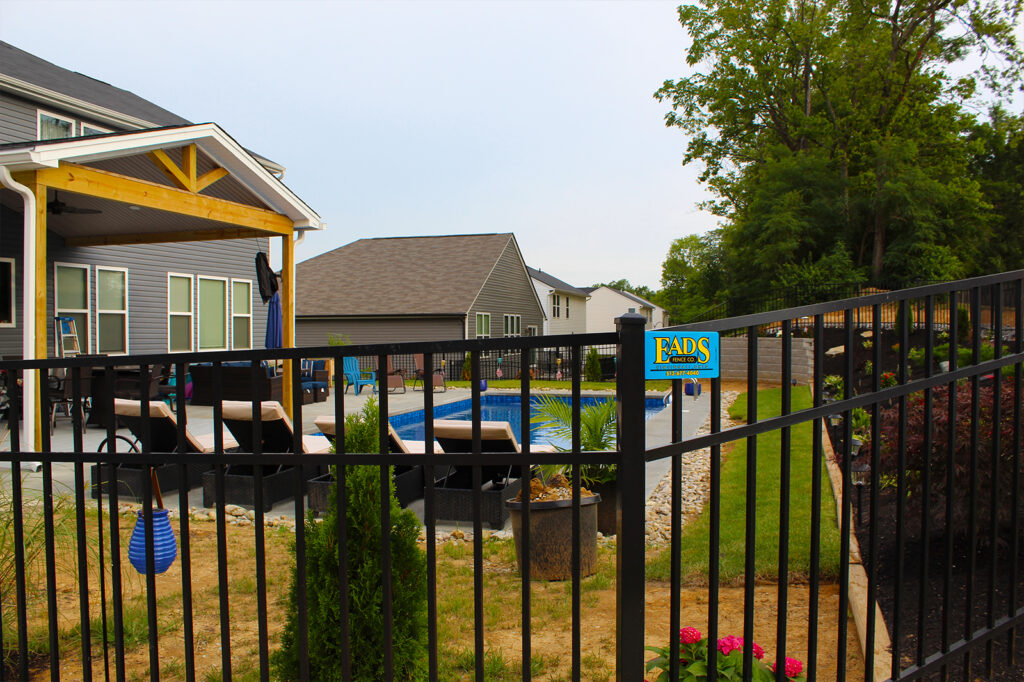
Pool Fence Installation Built to Pass Inspection
Eads Fence has installed pool barriers around Cincinnati, Dayton, Northern Kentucky, and Eastern Indiana for more than 45 years. We build to the barrier requirements your building department enforces. Where a permit is required, we pull it. Our Loveland showroom holds the largest indoor fence display in the Midwest, so you can choose exactly what you want.
What an inspector checks on a pool barrier
Ohio, Kentucky, and Indiana build their residential pool barrier language off the same model code, so the figures below hold across most of the jurisdictions we work in. Your building department has the final word, and a few local codes may be more strict.
Barrier height
48 inches is the common minimum, measured from the ground on the side facing away from the pool. Sloped yards get measured at the low point. That is where a barrier that looked tall enough on paper comes up short.
Gap at the bottom
No more than 2 inches between grade and the bottom of the barrier.
Openings in the barrier
Nothing in the fence can pass a 4-inch sphere. Picket spacing tightens when the horizontal rails sit close together, and the threshold that triggers it is set by your jurisdiction.
Climbable surfaces
Horizontal rails go on the pool side when they sit close enough together to work as a ladder. The barrier also has to be placed so an air conditioner, a shed, or a retaining wall does not give a boost over it.
Gates
Self-closing, self-latching, and swinging outward away from the pool. Latch position is set by how high it sits above grade. Gates are where most pool barrier inspections fail.
The house as part of the barrier
A dwelling wall can form one side of the barrier in many jurisdictions. Doors opening onto the pool area then need their own alarm or self-latching hardware.
Why homeowners hire Eads for pool fencing
We regularly pull pool fence permits around the Cincinnati region, so we already know what your county wants to see on the application. You will have the requirement for your address confirmed before anyone starts digging.
Most new pools need a new fence. We build yours to the height and spacing your jurisdiction requires, in a material and style that fits the rest of the yard. Code controls two dimensions. The rest is up to you.
If part of the yard is already fenced, we measure that first. Sometimes the existing run counts toward the barrier on its own, and sometimes the gap comes down to gate hardware or a few inches along the bottom. When that is all we find, that is all we quote. Replacing the whole fence is only considered as last resort when the current one cannot be brought up to code for a pool barrier.
Pool barrier requirements in Ohio, Kentucky, and Indiana
Kentucky and Indiana set pool barrier rules in state code. Ohio leaves them to your city or county. Find your state below for the standard your fence has to meet. Eads will confirm the exact details for your address before we build. While we do our best to keep this information current, please contact your city or county’s building department for up-to-date rules and regulations.
When what you have already counts

Above-ground pools
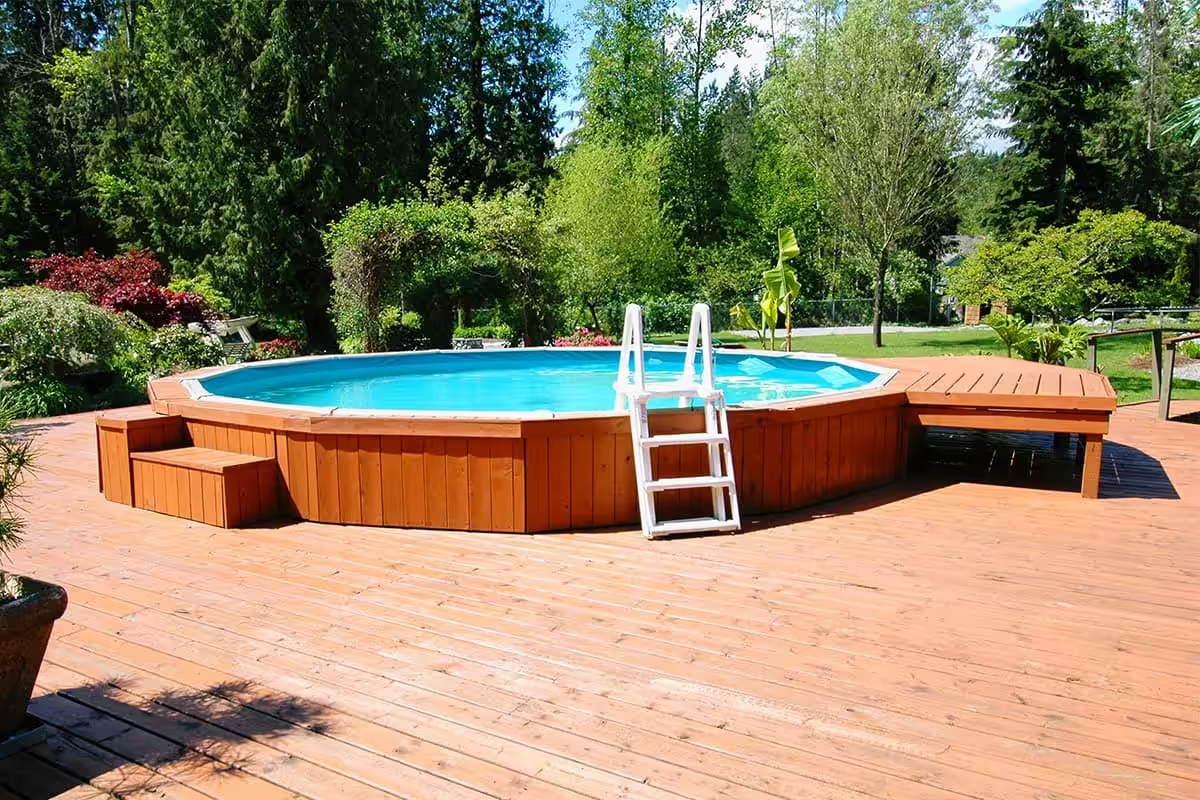
An above-ground pool wall of 48 inches or more can serve as its own barrier where the ladder locks or lifts out. A deck built against the pool changes that, since the deck becomes the way in. Most codes key off water depth rather than pool type, and 24 inches is the common trigger.
Hot tubs and spas
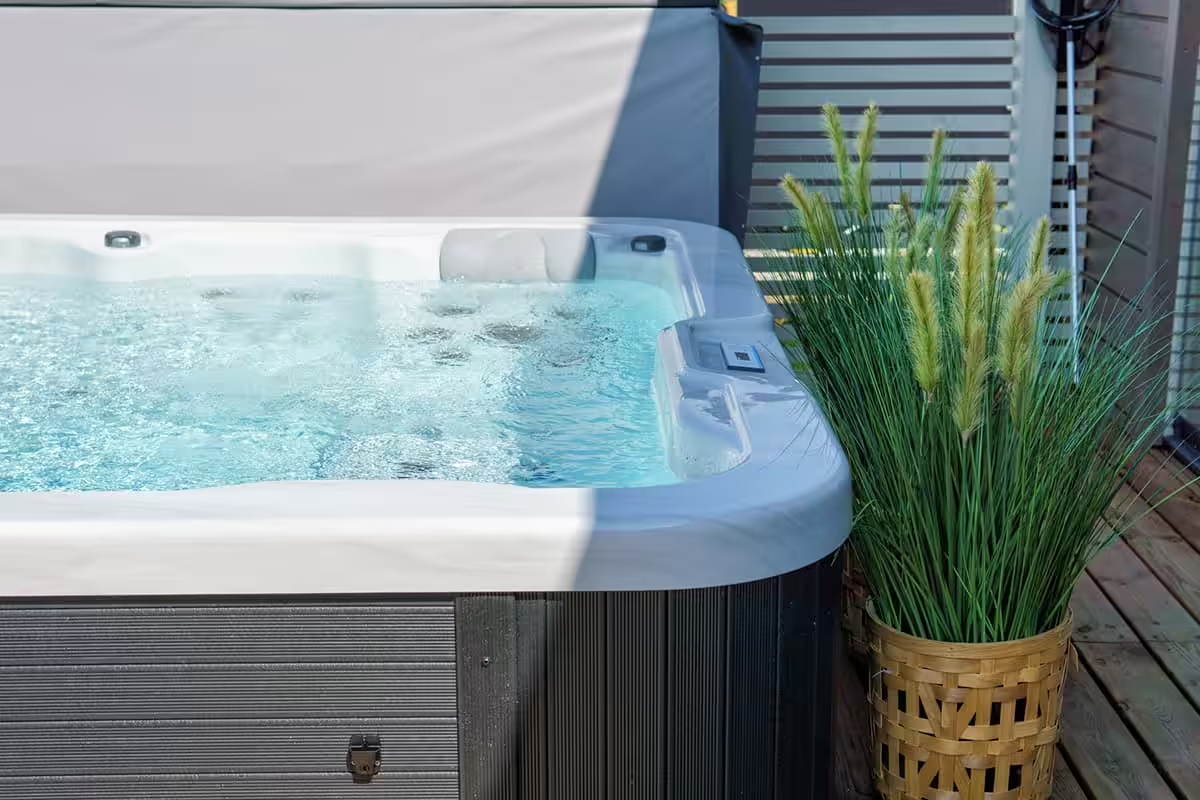
A rigid, lockable safety cover often satisfies the barrier requirement on its own. We confirm the standard your jurisdiction accepts and tell you whether you need a fence at all.
Existing Fence
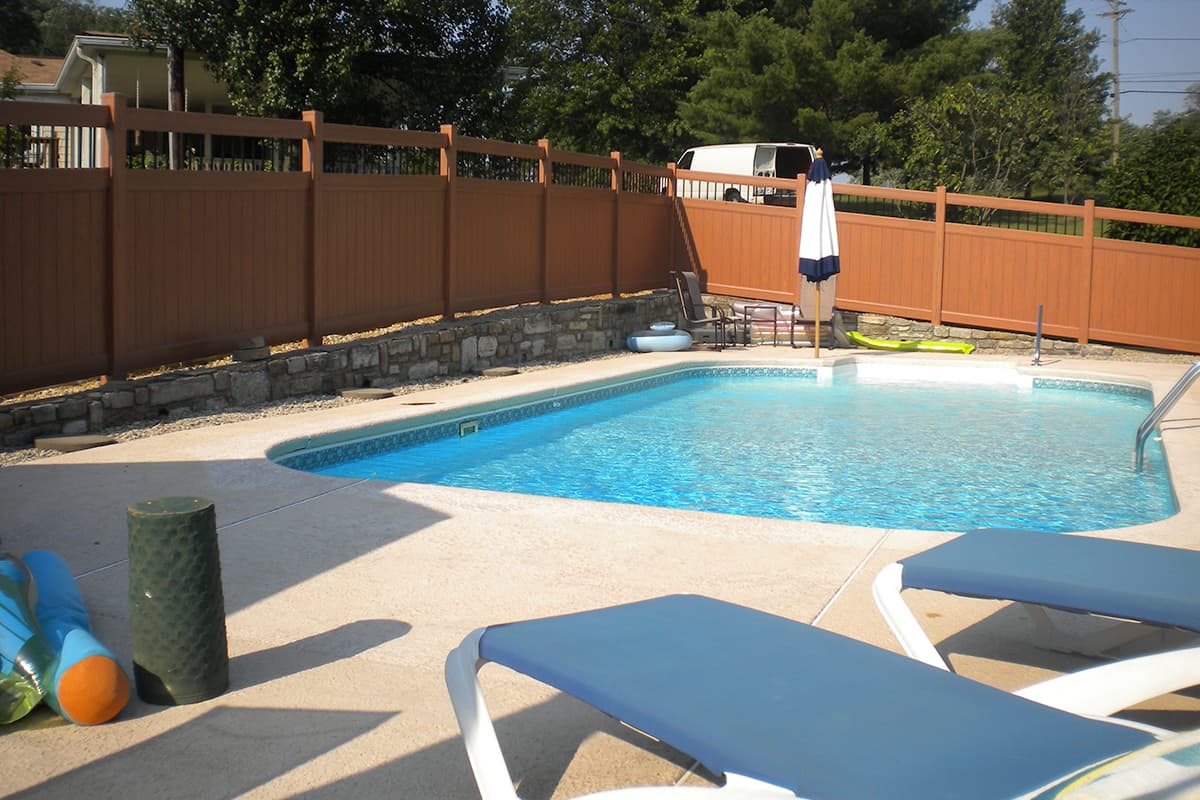
A perimeter fence often gets to code with a gate hardware change and a bottom adjustment. We measure the existing run and quote what it takes to bring it to code. Replacing the whole fence is the last option we consider.
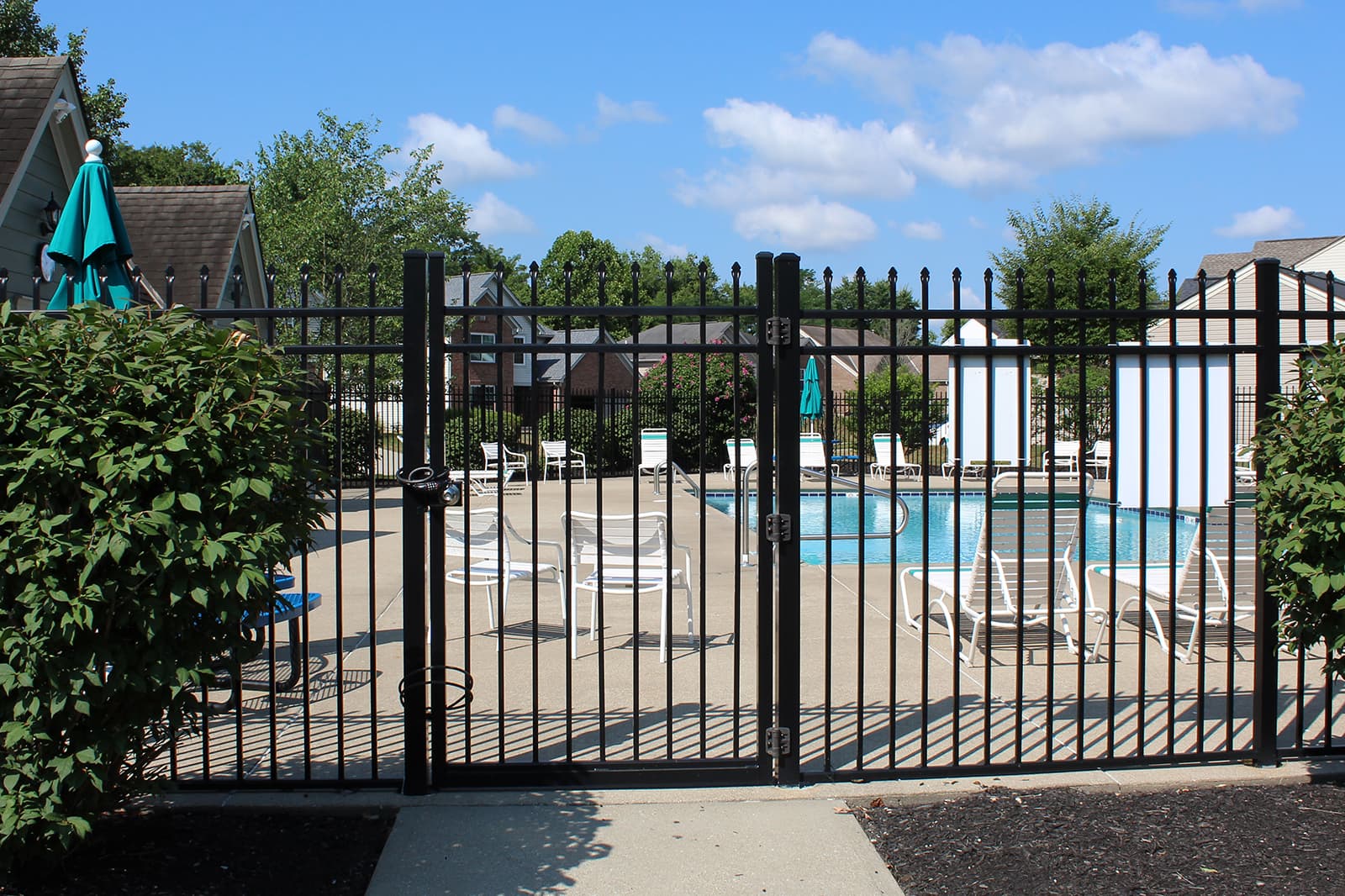
Aluminum or vinyl fencing for a pool barrier

Aluminum Fencing
Vertical pickets with a smooth outside face and no foothold. Rail placement can be set to the spacing your jurisdiction requires. The powder-coated finish holds up to pool chemistry and full sun, and you keep sight lines to the water from the house.

Vinyl Fencing
Available as picket or solid panel. A solid panel closes the view into the pool area from the street and satisfies the opening rule on its own. Rinses clean and never needs staining.
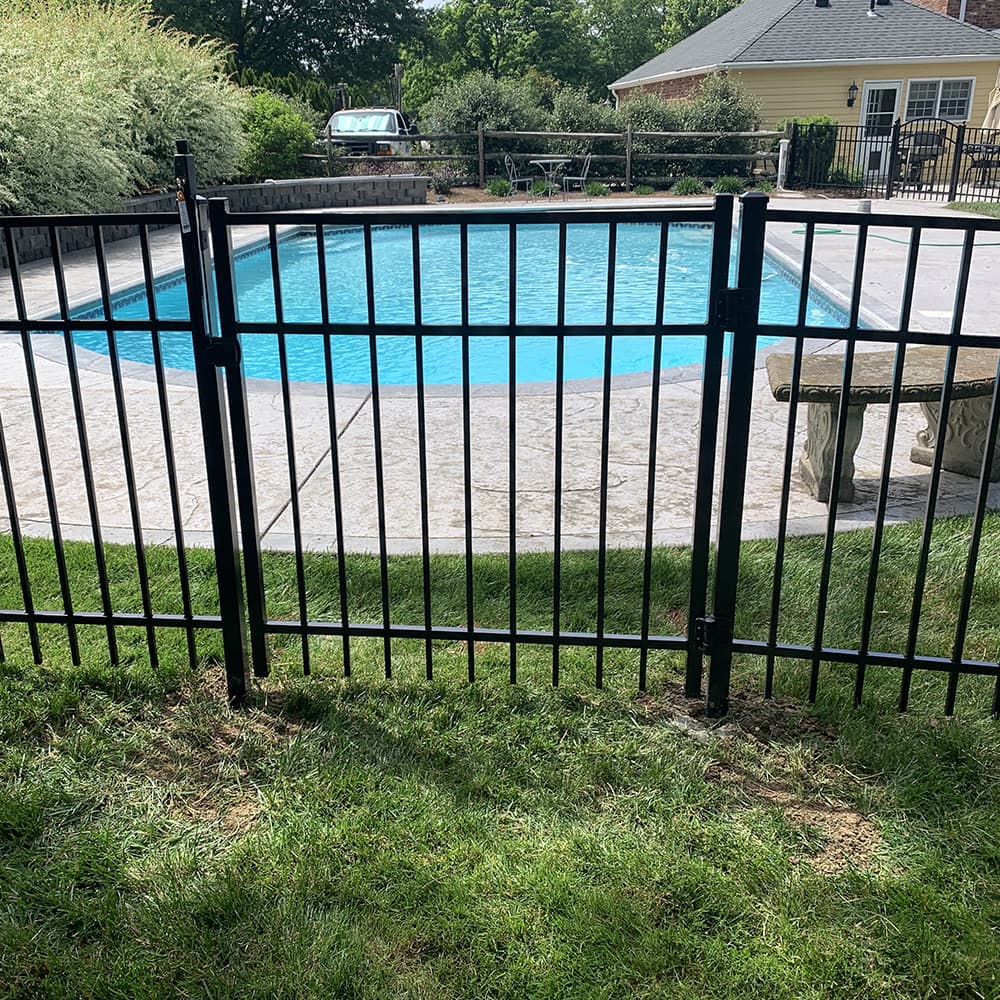
Gate hardware is where inspections fail
An inspector usually looks at the gate first. These three things get tested every time.

Self-closing and self-latching
The gate has to close and latch on its own from any open position. We adjust the closer on site rather than setting it at the shop.
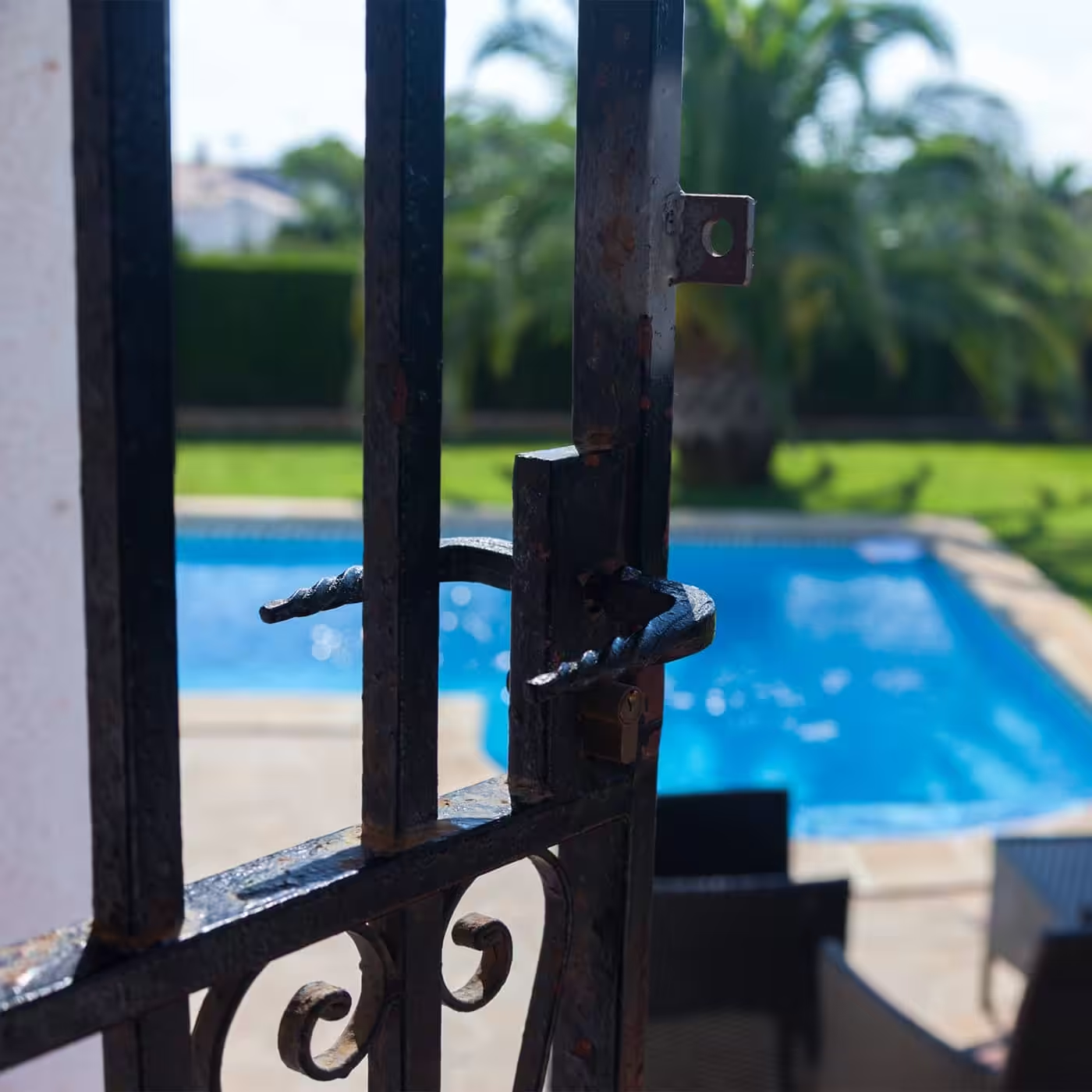
Swing direction and latch height
Pedestrian gates swing outward, away from the pool. Latch position depends on how high it sits above grade, and Cincinnati and Dayton do not treat it the same way.
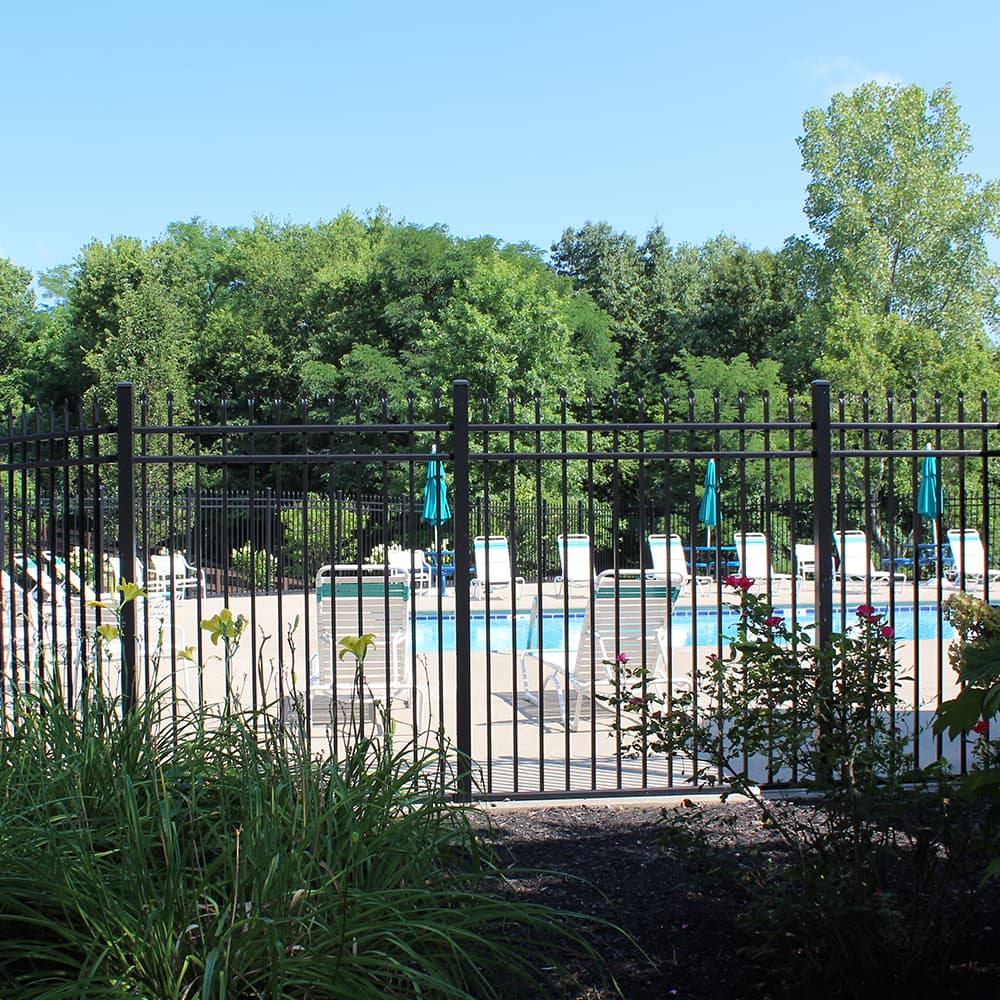
Barrier placement
Perimeter or pool-side placement changes what falls inside the barrier. We walk the yard and mark the line before we quote it.

Professional installation or DIY fencing materials